
Bulk Density And Energy Per Cubic Meter: Critical Criteria When Comparing Transportation And Storage Costs Of Wood Pellets
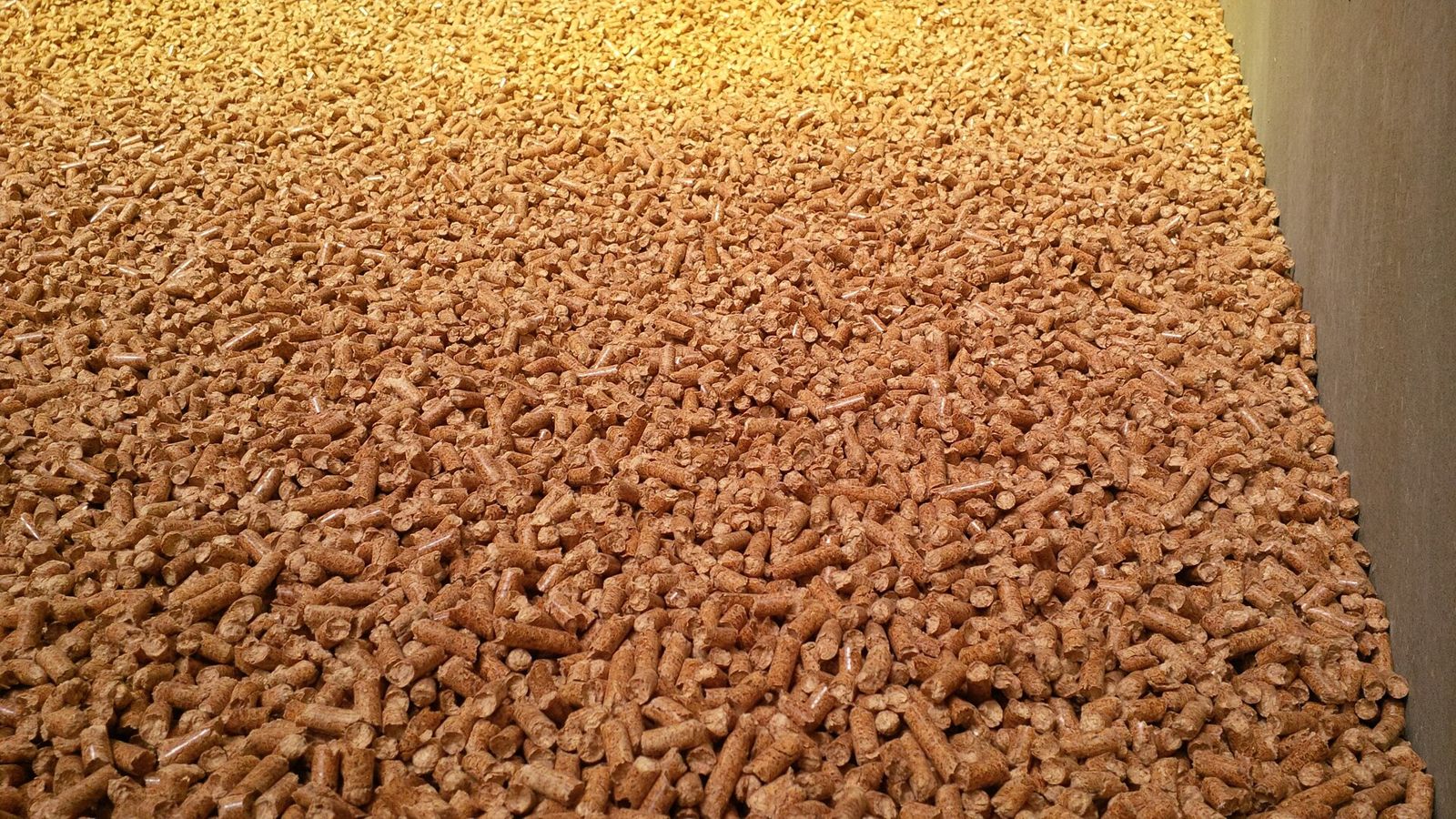
Photo: AzwoodEnergy · CC BY-SA 4.0
When selecting fuel for industrial boilers or importing coal and wood pellets, many businesses often focus on the purchase price per kilogram or simply the calorific value. However, two critical factors are often overlooked: bulk density and actual energy per cubic meter of storage space. These metrics directly affect transportation costs, required warehouse area, and total logistics costs in the supply chain.
This article will explain the concept of bulk density according to international standards, how to calculate the actual energy that can be contained in storage space, and compare three common fuel types to help businesses make more accurate purchasing decisions.
Bulk density and its significance in logistics
Bulk density is the mass of a material occupying a given unit volume, typically measured in kg/m³. For wood pellets, bulk density is not the density of individual pellets themselves, but rather the mass of a pile of pellets when stacked together, including the voids between pellets.
The ISO 17225-2 standard specifies wood pellet quality grades (A1, A2, B) based on multiple criteria, including diameter (commonly 6 mm or 8 mm with ±1 mm tolerance), length, moisture content, ash content, mechanical durability, fines content, and calorific value. ISO 17225-2 also mentions bulk density as one of the technical parameters to be monitored. Wood pellets are compressed under high pressure and at friction temperatures of approximately 100–130°C, causing the lignin in the wood to soften and bind the particles together, thus creating a product with fairly high density.
Bulk density has significant logistics implications because it determines:
- Container or vehicle payload: If fuel has low bulk density, containers may be full by volume but not reach maximum weight, leading to wasted transportation space.
- Required warehouse area: For the same amount of thermal energy to be stored, fuel with higher bulk density will occupy less space, reducing warehouse rental or construction costs.
- Handling costs: Higher bulk density means each shipment carries more thermal energy, reducing the number of loading/unloading operations and handling.
How to calculate actual energy per cubic meter of storage
To accurately compare different fuel types, businesses need to calculate the actual thermal energy capacity per cubic meter of warehouse space. The basic formula is:
Energy per cubic meter (MJ/m³) = Bulk density (kg/m³) × Calorific value (MJ/kg)
Or if using kcal units:
Energy per cubic meter (kcal/m³) = Bulk density (kg/m³) × Calorific value (kcal/kg)
Calorific value is the amount of thermal energy generated when burning one kilogram of fuel. To accurately calculate the thermal energy storage capacity per cubic meter, businesses need actual bulk density information from suppliers or test results.
When receiving quotations or technical specifications from suppliers, businesses should request:
- Measured actual bulk density (kg/m³)
- Calorific value (MJ/kg or kcal/kg)
- Actual moisture content (since high moisture reduces calorific value and increases useless weight)
From this, accurately calculate how much thermal energy can be contained in one cubic meter of warehouse space and compare with other fuel types.
Comparing bulk density and energy: three common fuel types
Three common fuel types for industrial boilers are wood pellets, wood chips, and coal. Each type has significantly different bulk density and heat generation characteristics.
Wood pellets
Wood pellets are compressed from sawdust, wood shavings, and wood processing by-products that have been dried, without requiring chemical binders thanks to natural lignin in the wood. The process of compressing under high pressure gives wood pellets relatively high density. According to general industry knowledge, wood pellets have significantly higher bulk density than loose wood chips due to being tightly compressed.
The calorific value of wood pellets according to reference data is approximately 4,200–4,800 kcal/kg, and grade A1 according to ISO 17225-2 requires a minimum of ≥16.5 MJ/kg. Grade A1 moisture content is ≤10%, helping ensure high calorific value and good storage.
Wood chips
Wood chips are wood that has been mechanically chipped, commonly used as raw material for pulp production, paper, and as fuel. Wood chips have irregular shapes, particle sizes vary widely, and have many voids between chip pieces when stacked. Therefore, the bulk density of wood chips is typically much lower than wood pellets.
The moisture content of wood chips also varies greatly. Fresh chips exported as paper raw material typically have moisture content of about 40–50% or even up to 55%, while chips for fuel may need to be dried more. High moisture reduces actual calorific value (since energy is consumed to evaporate water) and increases useless weight during transportation. Quality standards classify wood chips as fuel according to moisture (M), particle size (P), and ash content (A).
Coal
Coal has high bulk density and higher calorific value compared to wood products. The calorific value of coal is typically around 5,000–7,000 kcal/kg, significantly higher than wood pellets. Due to its solid mineral nature, coal typically has large bulk density.
Although coal delivers higher thermal energy per both kilogram and cubic meter, it also has much higher sulfur content (approximately 0.5–6%) compared to wood pellets (approximately 0.02–0.12%), leading to SO₂ gas emissions causing air pollution and acid rain. Coal ash content is also higher than wood pellets, causing difficulties in operation and ash handling.
Overall comparison
When comparing logistics costs between fuel types, it's necessary to calculate not only the purchase price per kilogram but also:
- Bulk density and thermal energy storage capacity per cubic meter (to calculate warehouse and volume transportation costs)
- Actual calorific value (kcal or MJ per kg)
- Environmental costs and regulatory compliance (sulfur emissions, ash, CO₂)
- Storage requirements (wood pellets need to be kept dry to avoid moisture; moist wood chips can ferment if stored long; coal is less affected by moisture)
Wood pellets provide a good balance between energy per volume, ease of storage (if kept dry), and more environmentally friendly compared to coal. Wood chips have the lowest bulk density, thus requiring larger warehouse space and higher transportation costs when calculated by actual thermal energy delivered.
Impact of bulk density on fuel export transportation costs
In international maritime transport, containers or bulk carriers have two limits: volume and payload. Fuel with low bulk density will fill volume before reaching maximum payload, while fuel with high bulk density may reach payload before filling volume.
Wood pellets, thanks to being tightly compressed, typically have bulk density high enough to efficiently utilize both payload and container volume. This helps reduce transportation costs per unit of thermal energy. Wood chips, due to having many voids, typically occupy large volume without reaching maximum payload, leading to wasted space. Coal, with high bulk density, easily reaches payload but typically doesn't completely fill the volume.
In 2024, Vietnam exported approximately 6 million tons of wood pellets, equivalent to 805.27 million USD, increasing 29.1% in quantity and 18.5% in value compared to 2023. About 95% of Vietnam's wood pellet production is for export, with Japan and South Korea being the two largest markets. Vietnam surpassed Canada from 2019 to become the largest wood pellet supplier to Japan, meeting demand for power plants under the FIT/FIP mechanism.
Competitive logistics costs are an important factor helping Vietnamese wood pellets have advantages over competitors from Canada or the US when exporting to Asian markets. High bulk density helps reduce sea freight costs, while raw materials from acacia plantations in Vietnam (approximately 2.5 million hectares of acacia forest, mainly harvested at 4–6 years old) provide abundant by-products for wood pellet production.
When purchasing wood pellets or coal for import, businesses should request suppliers to provide:
- Measured actual bulk density
- Packaging form (bags, big bags, or bulk)
- Compression ratio and stacking capability (affecting container utilization efficiency)
- Fines and impurities ratio (reducing actual useful thermal energy)
Guidelines for calculating warehouse storage space for industrial boilers
To determine the necessary warehouse space for wood pellet storage, businesses should follow these steps:
Step 1: Determine monthly thermal energy demand
Based on boiler capacity and operating time, calculate the required thermal energy (MJ or kcal) in one month or desired storage cycle.
Step 2: Calculate required fuel mass
Divide thermal energy demand by the calorific value of wood pellets (MJ/kg or kcal/kg) to get the mass of wood pellets needed to purchase. Note that calorific value decreases if moisture is higher, so the actual moisture of the shipment needs to be checked.
For example: If demand is 10,000,000 kcal/month and calorific value is 4,500 kcal/kg, the required mass is:
10,000,000 ÷ 4,500 ≈ 2,222 kg
Step 3: Calculate warehouse volume based on bulk density
Businesses need to request bulk density parameters from suppliers. Assuming the supplier indicates bulk density is X kg/m³, the required warehouse volume will be:
Volume (m³) = Mass (kg) ÷ Bulk density (kg/m³)
For example: If bulk density is 650 kg/m³ and 2,222 kg of wood pellets are needed, the required volume is:
2,222 ÷ 650 ≈ 3.42 m³
Step 4: Calculate warehouse floor area
Floor area depends on the safe stacking height of wood pellets (typically packaged in bags or big bags). If stacked 2 m high, the required floor area is:
Area (m²) = Volume (m³) ÷ Stacking height (m)
For example: 3.42 m³ ÷ 2 m = 1.71 m²
In practice, an additional 20–30% area should be reserved for aisles, handling, and safety.
Step 5: Notes on storage conditions
Wood pellets need to be kept dry and away from moisture. If exposed to water, wood pellets will swell approximately 3–4 times and crumble, losing usability. Storage warehouses should:
- Have roofing and rain barriers
- Be ventilated to avoid accumulation of CO, CO₂, methane from slow self-oxidation of wood pellets
- Not store warm wood pellets (warm wood pellets self-heat faster, with risk of fire)
- Avoid accumulation of fine wood dust thicker than approximately 3 mm as dust at high concentrations can ignite when encountering fire sources
Enclosed warehouses need thorough ventilation before personnel enter, as there have been fatal accidents when entering wood pellet storage warehouses lacking oxygen. Do not use water for firefighting in sealed silos; nitrogen or CO₂ gas is recommended.
Factors affecting bulk density: moisture, size, and raw material sources from Quang Ngai
The bulk density of wood pellets is not a fixed number but is affected by many technical and raw material factors.
Moisture content
High moisture increases useless weight (water occupies weight but doesn't generate thermal energy) and reduces actual calorific value. ISO 17225-2 requires grade A1 to have moisture ≤10%. In the production process, raw materials are typically dried to bring moisture down to about 10–15% before pressing; if raw materials are too moist (above approximately 17%), the press will generate more steam and reduce efficiency.
Moisture also affects storage capability: moist wood pellets easily swell and break, mold, and reduce quality during storage. Businesses need to check moisture with specialized measuring equipment when receiving goods.
Pellet size
Common diameters of wood pellets are 6 mm or 8 mm (±1 mm according to ISO 17225-2). Wood pellets with larger diameters may have slightly different bulk density due to shape and stacking method. Wood pellet length also affects the ability to arrange evenly in bags or silos.
Raw material source
Different raw material sources have different lignin, cellulose, and wood density contents, affecting the hardness and bulk density of wood pellets. Vietnam has approximately 2.5 million hectares of acacia forest, about 80% managed by households. Acacia wood is typically harvested at 4–6 years old, and most small acacia wood goes into chips and wood pellets.
In Quang Ngai, there used to be over 8,200 hectares of acacia forest affected by wilt disease, and diseased areas were harvested and replanted in 2024. Acacia wood from diseased or young trees may have different properties compared to healthy acacia wood. Businesses purchasing wood pellets should request information about raw material origin and quality certification to ensure consistency.
ISO 17225-2 distinguishes grade A1 (virgin wood/untreated wood by-products) and grade B (allowing addition of forest residues, bark, untreated industrial wood). Grade A1 has ash content ≤0.7% and lower nitrogen, while grade B allows ash ≤2.0%. High ash content reduces useful thermal energy and increases useless weight in each cubic meter of warehouse.
Production process
The steps of screening impurities, drying, hammer milling, pressing under high pressure, and cooling all affect final quality. Friction heat when pressing is approximately 100–130°C, softening lignin and binding particles together. There are two types of presses: flat die and ring die, each with its own advantages and disadvantages regarding productivity and quality.
Mechanical durability (minimum 98% for grade A1) and fines content (≤1%) also affect actual bulk density in warehouses, as wood pellets with many fines will fill voids and slightly increase bulk density but reduce combustion quality.
Comparing logistics costs when using biomass energy and other fuels
Besides wood pellets and wood chips, compressed sawdust charcoal (charcoal briquettes) is also a biomass energy product exported from Vietnam, mainly serving the BBQ grilling market in Japan, South Korea, and other countries.
Process and characteristics of compressed sawdust charcoal
Compressed sawdust charcoal is produced through the process of: drying sawdust, compressing into bars, carbonization, then cooling. Some methods compress when sawdust is partially carbonized so the charcoal self-binds, without needing additional binders. However, many commercial charcoal briquettes still add binders such as starch or molasses to help products hold shape better.
Ogatan is a type of compressed sawdust charcoal bar in hexagonal or square shape with hollow center, popular in Japan and widely used for Japanese-style grilling (konro, yakiniku). Ogatan charcoal from Vietnam is sold in many markets. Burning time listed by manufacturers is 2–4 hours and ash ratio is approximately ≤3%, but these are seller's data, without independent verification.
Compared to lump charcoal (e.g., Binchotan – high-quality Japanese lump charcoal), briquettes are denser and more uniform so they typically burn longer, while lump charcoal typically burns hotter.
Bulk density and energy of sawdust charcoal
Because charcoal has undergone carbonization (removing water vapor and volatile compounds), bulk density and carbon content are higher than uncarbonized wood pellets. This means compressed sawdust charcoal can carry higher thermal energy per cubic meter compared to wood pellets, but has lower calorific value than coal.
Logistics cost comparison
When comparing logistics costs between biomass energy types:
- Sawdust charcoal has higher bulk density, thus saving warehouse space and transportation. However, selling price is typically higher due to more complex production process (requiring carbonization).
- Wood pellets have simpler production process, lower cost, but require larger storage space compared to sawdust charcoal (when calculated by equivalent thermal energy).
BBQ restaurant businesses or charcoal importers need to consider:
- Customer demand (briquettes burn long and steady; lump charcoal burns hot with distinctive aroma)
- Available warehouse space
- Transportation costs (briquettes are heavier and denser, reducing costs per unit of thermal energy)
- Cleanliness and ash requirements (briquettes typically have less ash than lump charcoal)
Wood chips as biomass energy fuel
Wood chips can also be used as biomass energy fuel for boilers, especially large boilers capable of burning wetter fuel. However, due to low bulk density, wood chips require very large warehouse space and high transportation costs when calculated by actual thermal energy. Wood chips are typically economical only when used immediately at or near production sites (e.g., paper mills using chips as main raw material), or when wood chip purchase price is very low compared to other fuels.
Moisture content and particle size of wood chips greatly affect combustion efficiency. Large boilers can burn moist chips (reference below approximately 30% for small boilers, but not a standard level), while small boilers need drier chips to avoid generating much smoke and reducing efficiency.
Conclusion
When comparing fuel costs for boilers or importing coal and wood pellets, businesses should not only look at purchase price per kilogram or simple calorific value. Bulk density and actual thermal energy storage capacity per cubic meter of storage space are two decisive factors affecting logistics costs, required warehouse area, and total cost of ownership.
Wood pellets, thanks to being tightly compressed, provide higher bulk density compared to wood chips and a good balance between energy, cost, and environmental friendliness compared to coal. Compressed sawdust charcoal – another form of biomass energy – has even higher bulk density but serves mainly BBQ grilling demand rather than industrial boilers. Wood chips have the lowest bulk density, thus only economical in some special cases.
Businesses should request suppliers to provide complete parameters:
- Measured actual bulk density (kg/m³)
- Calorific value (MJ/kg or kcal/kg)
- Moisture content, ash content, fines
- Quality certification (ENplus) and sustainability (SBP, FSC, PEFC) if exporting to high-requirement markets like Japan, South Korea, Europe
From there, accurately calculate required warehouse space, actual transportation costs, and total energy costs, helping make reasonable purchasing decisions and optimize logistics costs in the supply chain.