
What's the Difference Between Pressed Sawdust Charcoal Bars and Lump Charcoal? How to Choose Charcoal for BBQ Restaurants
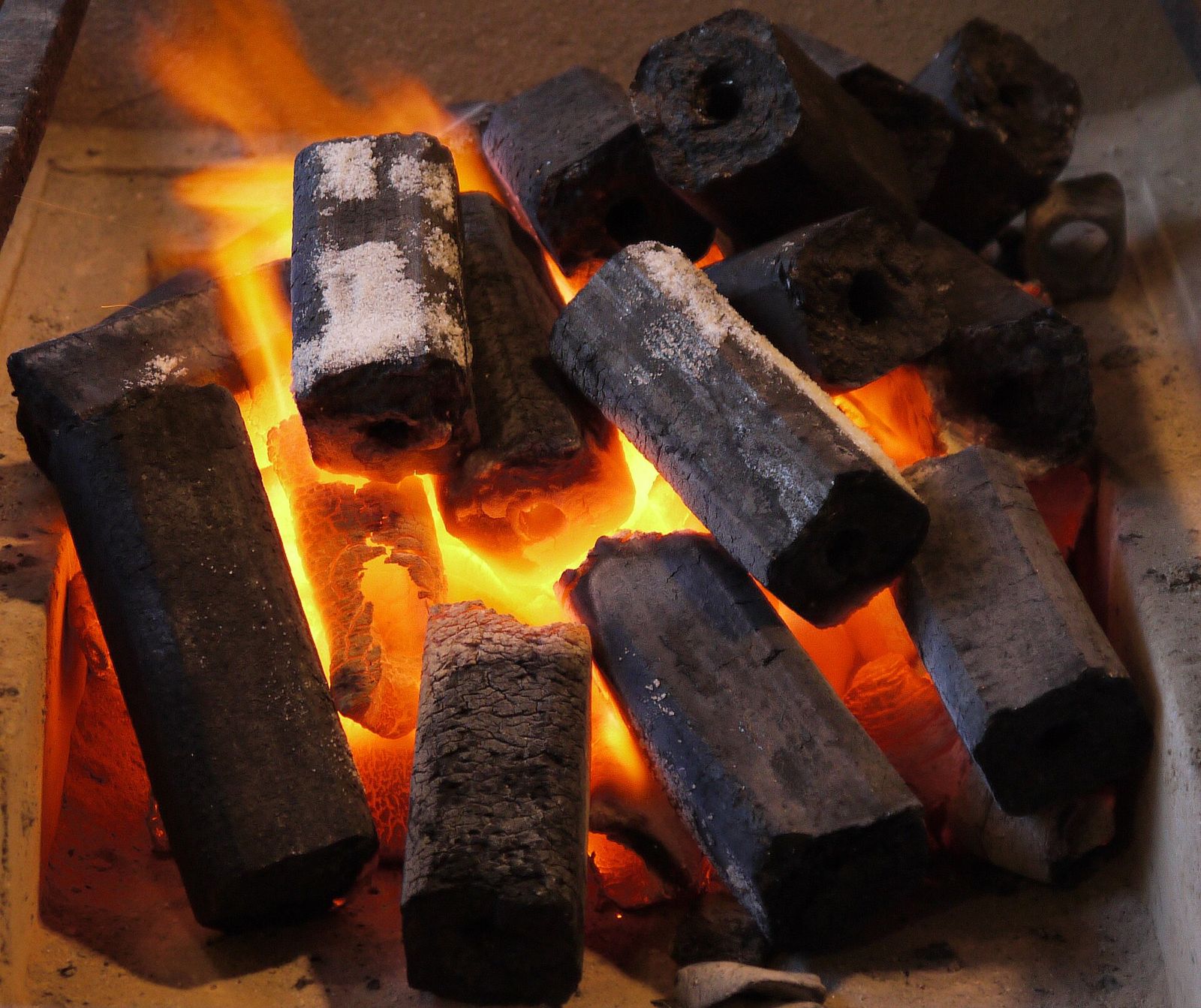
Photo: DryPot · CC BY-SA 3.0
When selecting fuel for BBQ restaurants, businesses typically face two main options: pressed sawdust charcoal bars and traditional lump charcoal. Each type has different origins, production processes, and characteristics that directly impact business efficiency, food quality, and operating costs.
Pressed sawdust charcoal bars are produced from wood processing by-products – sawdust – through an industrial process. Traditional lump charcoal is typically carbonized from solid wood blocks. The differences in raw materials and processes create distinct characteristics.
Pressed Charcoal Bars: Characteristics and Production Process
Pressed sawdust charcoal bars are created through a process of: drying sawdust, compressing it into solid bars, carbonizing in kilns, then cooling. Some pressing methods partially carbonize the sawdust so the charcoal self-binds, eliminating the need for chemical binders.
At Gia Huy Wood Processing Co., Ltd. in Quang Ngai, products are manufactured from acacia wood – a natural raw material common in the local area. The process includes: pressing bars from acacia sawdust, then closed carbonization in 18 tunnel kilns with heat recovery and smoke dust filtration systems. According to the manufacturer, Gia Huy's pressed charcoal bars are smokeless, odorless, do not spark, and burn for approximately 3–4 hours.
Compared to lump charcoal, pressed charcoal is denser and more uniform, so it typically burns longer. Lump charcoal usually burns hotter but the flame duration may be shorter. Many commercial pressed charcoals add binders like starch or molasses to maintain shape when sold; while pure lump charcoal contains no additives.
Note that pressed sawdust charcoal bars differ from wood pellets. Wood pellets are typically smaller in size, used primarily for biomass stoves and heating. While pressed charcoal bars have undergone complete carbonization, making them more suitable for cooking and BBQ.
Traditional Lump Charcoal: Pros and Cons for BBQ Use
Lump charcoal is carbonized from natural solid wood, commonly premium white charcoal varieties like Japanese Binchotan. Lump charcoal typically provides higher burning temperatures, suitable for dishes requiring strong heat.
However, lump charcoal may be inconsistent in size and quality depending on each wood batch. Burning time and ash levels may also vary more compared to industrial pressed charcoal.
Comparing Pressed and Lump Charcoal: What Criteria Matter for Restaurants?
When selecting fuel for BBQ restaurants, important criteria include:
Burning time: Pressed charcoal typically burns longer and more consistently, helping reduce the frequency of charcoal replacement during shifts. Manufacturers usually indicate burning times of 2–4 hours, however these are seller-provided figures without independent verification.
Smoke and odor: This factor affects customer experience and working environment. Some pressed charcoals produced through closed processes have characteristics that reduce smoke and odor compared to manually burned charcoal.
Ash ratio: Less ash makes cleaning easier and reduces labor costs. For each charcoal type, request specific ash data from suppliers rather than relying only on general descriptions.
Cost: Compare costs by usage time rather than just initial purchase price.
How to Choose Suitable Charcoal for BBQ Restaurants in Vietnam
BBQ restaurants should clearly define their needs: type of grilled dishes (high heat or low sustained flame), space (enclosed or ventilated), and cleaning capacity. Pressed charcoal may be more suitable for restaurants requiring continuous operation, enclosed environments needing smoke reduction. High-quality lump charcoal suits upscale restaurants emphasizing traditional flavor.
Businesses can contact factories directly to test products before purchasing large quantities.
Raw Material Sources and Biomass Energy from Acacia Wood in Quang Ngai
Quang Ngai is one of the localities with abundant forestry by-products. Gia Huy Wood Processing Co., Ltd., a member of Son Hoa Group, located its factory at Thach Tru Industrial Cluster, Duc Lan Commune, Mo Duc District, utilizing local acacia wood and wood shavings as raw materials for processing.
Using fuel from wood by-products helps maximize forestry resources while creating biomass fuel that can replace coal in many applications. Gia Huy's products serve domestic customers and are expanding to international markets such as Japan, South Korea, and the Middle East for BBQ restaurants and heating. This is one of the potential charcoal export products of Vietnam's forestry sector.
Businesses wanting to learn more or cooperate can contact Gia Huy factory directly in Quang Ngai.