
Acacia Wood Chips: Characteristics, Specifications and Applications in Paper Production
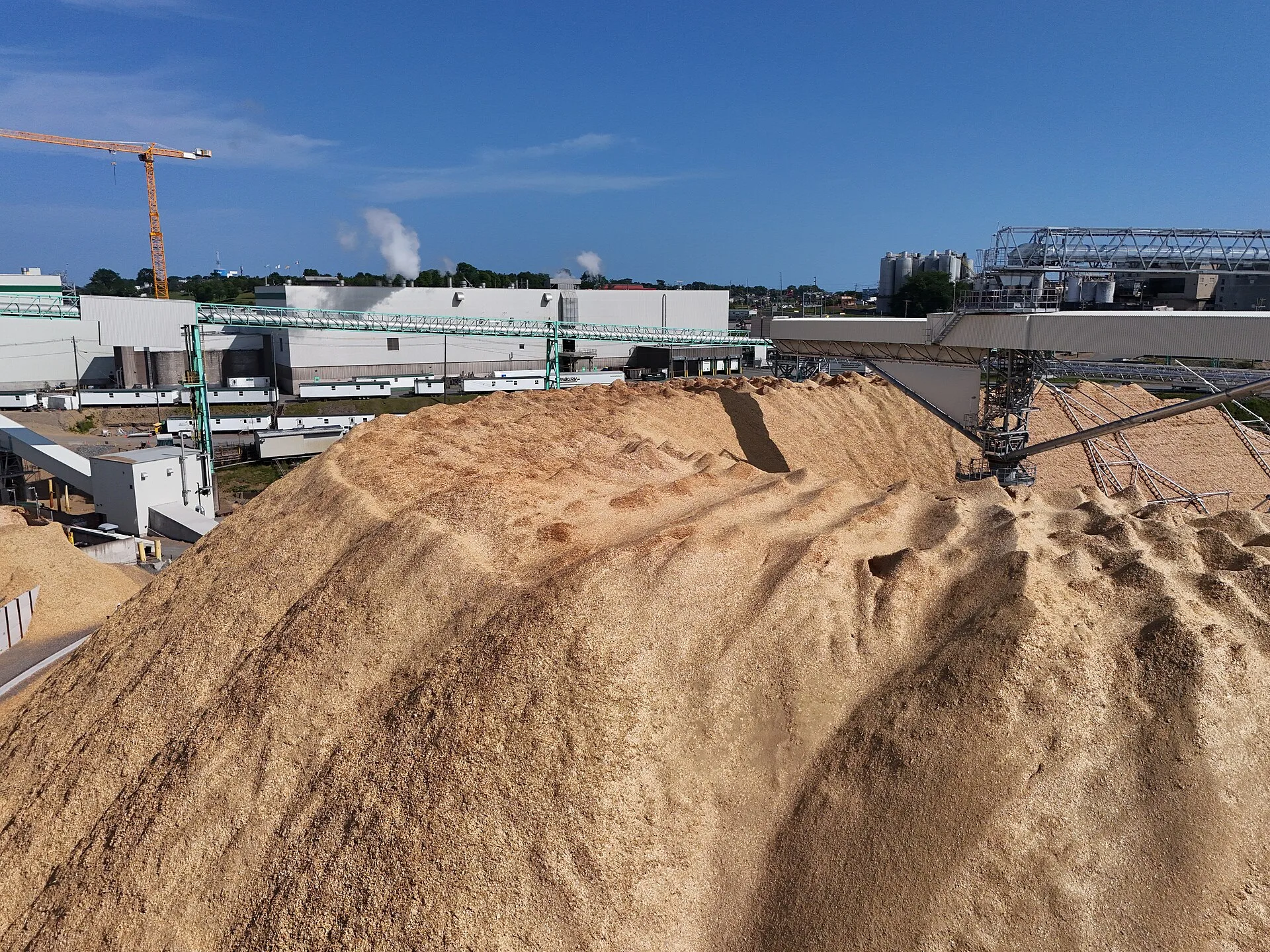
Photo: Quintin Soloviev · CC BY 4.0
Wood chips are an important raw material in the paper production and biomass energy industries. With abundant acacia plantation resources, Vietnam has become a major supplier to regional markets. This article introduces the characteristics, quality specifications and main applications of this product.
What Are Wood Chips And Their Role In Paper Production
Wood chips are products mechanically chipped into small pieces, sourced from roundwood, branches and tops, or by-products from processing workshops. This product is primarily used in pulp production, alongside its role as biomass fuel and raw material for other processing industries.
In paper production, chips are converted into pulp through chemical or mechanical processes. Raw material quality directly affects production efficiency and final product quality.
Characteristics Of Acacia Wood Chips In Vietnam
Vietnam has approximately 4.66 million hectares of planted forests as of the end of 2022, of which acacia accounts for about 2.5 million hectares, mainly managed by households. Growers typically harvest acacia at 4-6 years of age. In Quang Ngai, forestry by-products from acacia are very abundant, creating favorable conditions for production.
Most small acacia wood in Vietnam is currently processed into chips and pellets. This is a renewable raw material, sourced from natural planted forests, aligned with sustainable development trends.
Wood Chip Quality Specifications
ISO 17225-4:2021 standard classifies fuel products by origin and three main criteria: moisture content (M), particle size (P) and ash content (A). Chips are divided into grades A1, A2, B1, B2, where grade A is a cleaner product with lower bark content. Foreign impurities and bark content are also monitored indicators.
Moisture content affects calorific value, transportation costs and boiler operation capability. Large boilers can burn chips with higher moisture, while small boilers require drier products.
Particle size determines uniformity when feeding into processing equipment. ISO/TS 17595:2025 provides guidance on sampling, moisture and size measurement. Moisture measured by absolute dry method gives more accurate results than quick measurement devices.
Ash content reflects the amount of mineral impurities and bark in the product. Low ash content helps reduce ash residue during combustion and processing.
Detailed specifications for chips used in paper production are typically specified in contracts between buyers and sellers.
Main Applications Of Wood Chips
This product has two main applications:
Raw material for pulp production: Chips are the primary raw material for paper mills, converted into pulp for producing various types of paper.
Biomass fuel: The product is also used as fuel for industrial boilers and energy production systems. This is a renewable energy source, contributing to replacing fossil fuels.
In addition, chips are also raw materials for some other processing industries.
Wood Chip Export Market From Vietnam
According to a Forest Trends report in August 2024, Vietnam exports this product to about 12 markets, but over 98% is concentrated in four countries: China, Japan, Indonesia and South Korea. China and Japan alone account for over 90% of export value.
Average export prices in the first half of 2024 reached about 145 USD/ton, with prices to China around 146 USD/ton, to Japan around 143.4 USD/ton and to South Korea over 149 USD/ton. These figures are only for market trend reference.
Gia Huy's Wood Chips – Renewable Raw Material Source In Quang Ngai
Gia Huy Wood Processing Co., Ltd. supplies chips from natural acacia, a renewable raw material serving the paper production and processing industries. Gia Huy's factory at Thach Tru Industrial Cluster, Duc Lan commune, Mo Duc district, Quang Ngai province is located in an area with abundant forestry by-products. Transportation connections with N2-N3 road are convenient for heavy trucks and containers.
As a member of Son Hoa Group, Gia Huy operates with the orientation of maximizing local forestry by-products utilization, creating quality products and contributing to local socio-economic development as well as environmental protection.
For technical specifications and quotations, please contact Gia Huy directly at the factory.