
What are Wood Pellets? Quality Standards and How to Choose Wood Pellets for Industrial Boilers
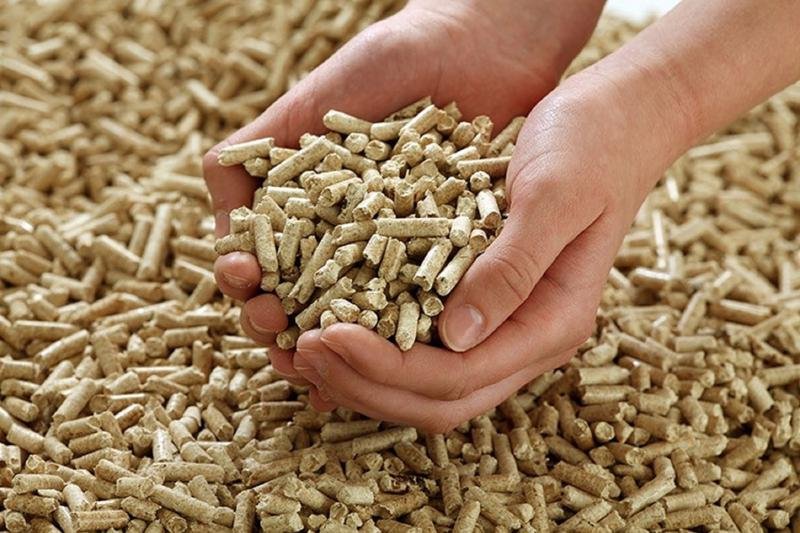
Wood pellets are a biomass fuel in pellet form, compressed from sawdust, wood shavings, and dried wood processing by-products. The special feature of this fuel is that it requires no chemical binders: the heat and pressure during the compression process cause natural lignin in the wood to soften and then bind the particles together. Common diameters are 6 mm or 8 mm (±1 mm according to international standard ISO 17225-2).
At Gia Huy, we produce from 100% natural wood – primarily acacia wood, wood shavings and sawdust, all of which are local forestry by-products from Quang Ngai. Our factory at Thach Tru Industrial Cluster, Duc Lan commune, Mo Duc district has a capacity of over 10,000 tons per year, serving both domestic and export markets.
Quality Standards According to ISO 17225-2
The international standard ISO 17225-2 classifies pellets into grades A1, A2, and B. Grade A1 is for products made from virgin wood or chemically untreated wood residues, with low ash and low nitrogen content. Grade B allows for additional forest residues, bark, and untreated industrial wood.
Key indicators include: diameter, length, moisture content, ash content, mechanical durability, dust and fines content, bulk density, and calorific value. Specifically, Grade A1 limits require ash ≤0.7%, moisture ≤10%, calorific value ≥16.5 MJ/kg; while Grade A2 allows ash ≤1.2% and Grade B allows ash ≤2.0%.
Important Technical Parameters When Selecting Fuel for Industrial Boilers
When selecting biomass fuel for industrial boilers, businesses need to pay attention to three main parameters:
Moisture content: Products with low moisture content will burn more efficiently and produce less smoke. Raw materials that are too wet (above approximately 17%) will generate more steam when compressed, affecting quality. Gia Huy wood pellets have moisture content below 10%, suitable for industrial combustion needs.
Ash content: Low ash content means less waste after combustion, reducing furnace cleaning work and increasing efficiency. The ash content of Gia Huy wood pellets is below 1.5%.
Heat value: This is the decisive factor in heat generation capacity. Gia Huy wood pellets have a heat value of 4,200–4,600 Kcal/kg, suitable for industrial boilers, thermal power plants, and heating.
Production Process of Wood Pellets and Sawdust Charcoal in Quang Ngai
The industry's production process typically goes through the following steps: screening to remove impurities (stones, metal, plastic), drying raw materials using rotary drums to bring moisture content down to about 10–15%, hammer milling for uniform particle size, pressing through molds under high pressure (frictional heat of about 100–130°C causes lignin to bind), cooling to harden, then screening to remove dust and fines before bagging for shipment.
At Gia Huy, the factory spanning over 3,600 m² is equipped with automated grinding and rotary drum drying systems. Our process includes: raw material reception → grinding and rotary drum drying → pellet pressing or bar pressing. Specifically for sawdust charcoal, after pressing bars from acacia sawdust, we carbonize them in 18 sealed tunnel kilns with heat recovery and smoke dust filtration. Our sawdust charcoal product is smokeless, odorless, spark-free, burns for 3–4 hours – suitable for BBQ restaurants, heating, and export. Our export charcoal capacity is 2,600 tons per year.
Comparison with Coal and Benefits of Biomass Energy
In terms of calorific value, according to reference data from suppliers, wood pellets are about 4,200–4,800 kcal/kg while coal is about 5,000–7,000 kcal/kg, so coal is higher by weight. However, when evaluating fuel, cost per energy unit should be considered, not just price/kg.
The major advantage of biomass fuel is significantly lower sulfur content (according to suppliers, about 0.02–0.12% compared to about 0.5–6% in coal), and ash is also typically lower than coal. Using biomass to replace coal or FO oil in boilers is considered a way to reduce greenhouse gas emissions and is a fuel conversion direction being discussed in Vietnam.
Storage and Safety Precautions When Using
The product must be kept dry and protected from moisture: when exposed to water, it will swell about 3–4 times and crumble. It should be stored in a covered, well-ventilated area, avoiding storing while still hot in warehouses (warm pellets heat up faster).
Enclosed warehouses can accumulate CO, CO2, methane gases due to slow self-oxidation; there have been fatal accidents when entering sealed warehouses, so ventilation is necessary before entering. Fine wood dust at high concentrations can ignite when exposed to flame sources; do not allow dust to accumulate thicker than about 3 mm. Do not use water to fight fires in sealed silos; nitrogen or CO2 gas is recommended.
Gia Huy factory has an Environmental Protection Plan Confirmation Certificate issued by Mo Duc District People's Committee, and a fire prevention and fighting system approved by the Fire Prevention & Rescue Police Department – Quang Ngai Province Public Security (including a 53 m² underground water tank, lightning protection system, and standard emergency exits).
Export Charcoal Market and Vietnamese Wood Pellets
Vietnam exported wood pellets in 2024 at approximately 6 million tons (6.03 million tons, $805.27 million, up 29.1% in volume and 18.5% in value compared to 2023, according to the industry association via VnEconomy). About 95% of Vietnam's wood pellet production is for export.
Japan is the world's second-largest importer with over 6 million tons in 2024; Vietnam surpassed Canada from 2019 to become the largest supplier. Shipments from Vietnam, Canada, and the US accounted for 87.8% of Japan's import volume in 2024. In South Korea, imports meet about 82% of wood pellet demand in 2023; the country's RPS target is 13.5% in 2024 and 25% in 2030.
At Gia Huy, we are expanding exports, targeting Japan and South Korea for both sawdust charcoal and biomass fuel, as well as the Middle East for sawdust charcoal used for BBQ and heating. Gia Huy is a member of Son Hoa Group; the company's mission is to maximize the use of local forestry by-products, contributing to local socio-economic development and environmental protection.
Customers interested in wood pellets, sawdust charcoal, or export cooperation can contact directly at Gia Huy factory – Thach Tru Industrial Cluster, Duc Lan commune, Mo Duc district, Quang Ngai province.
Photo: Andres Siimon